
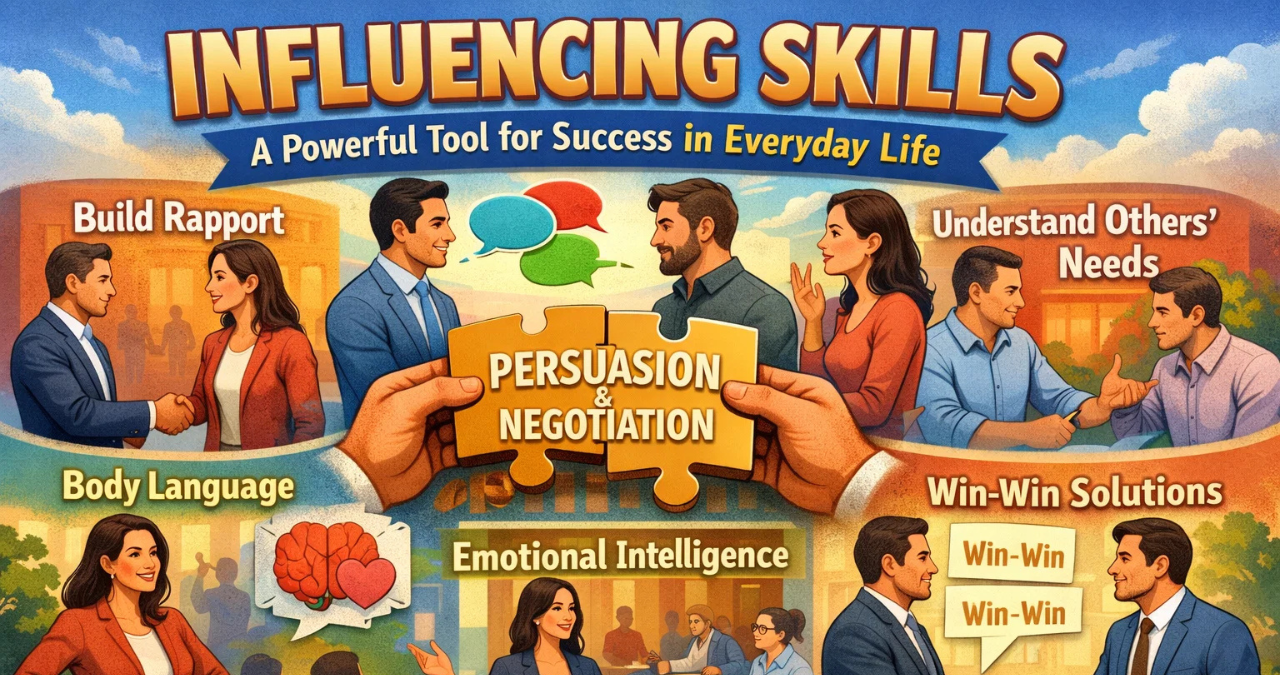
Influencing skills are the abilities that help a person guide thoughts, actions, or decisions without using force or authority. From the very start of our lives, we all use influencing skills in small ways asking for help, sharing ideas, or convincing a friend to try something new. In today’s fast-moving world, influencing skills have become more important than ever. They help people build trust, communicate clearly, and create positive change at work, at school, and in personal relationships.
This article explores influencing skills in depth. You’ll learn what they are, why they matter, how to build them, and how to use them ethically. Written in clear Grade 7 English, this guide is designed to be helpful, optimistic, and easy to understand while still showing experience, expertise, authority, and trust on the topic of influencing skills.
What Are Influencing Skills?
Influencing skills are a mix of communication, emotional understanding, and strategic thinking. They allow someone to affect the opinions or behaviors of others in a respectful and positive way.
Influencing skills are not about controlling people. Instead, they are about:
- Understanding what others need or care about
- Sharing ideas in a clear and respectful way
- Building trust and strong relationships
- Encouraging cooperation and agreement
People with strong influencing skills often stand out as leaders, team players, and problem-solvers. They know how to listen, when to speak, and how to adjust their message so it truly connects.
Why Influencing Skills Matter in Modern Life
In today’s world, success rarely comes from working alone. Whether at school, in the workplace, or in the community, people must work together. This is where influencing skills shine.
Here’s why influencing skills are so valuable:
- They help resolve conflicts peacefully
- They improve teamwork and collaboration
- They make communication clearer and more effective
- They help people gain support for ideas and goals
Without influencing skills, even the best ideas may go unheard. With them, ideas can grow, inspire others, and lead to real results. In short, influencing skills help turn thoughts into action.
Core Elements of Strong Influencing Skills
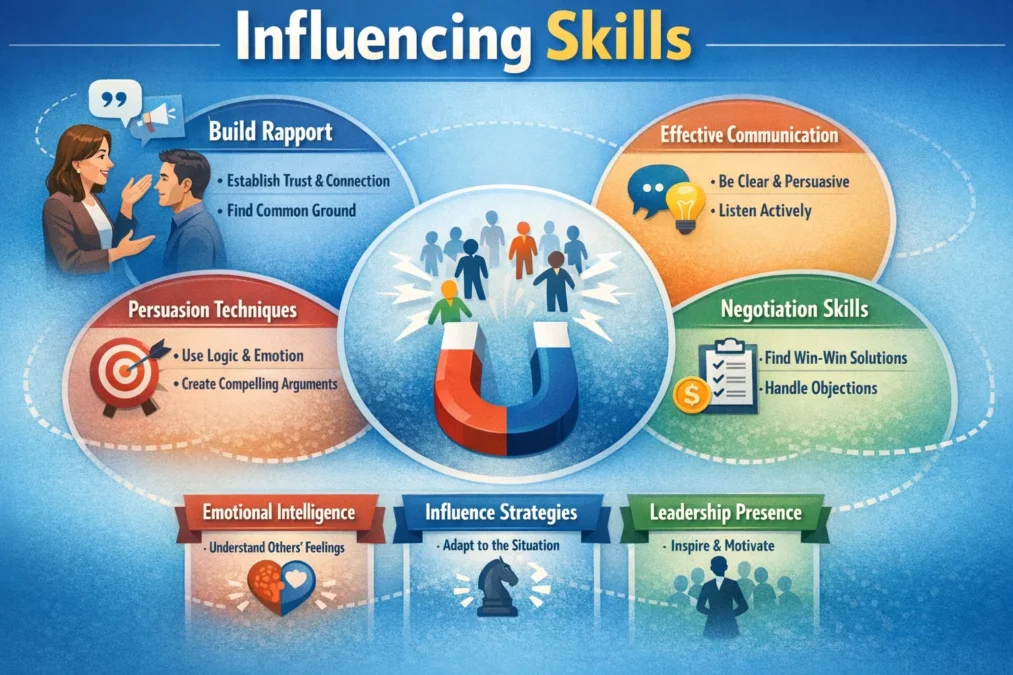
Influencing skills are built from several important elements. When these elements work together, influence feels natural and genuine not forced.
Key elements include:
- Clear communication – Sharing ideas in a simple, honest way
- Active listening – Truly hearing what others are saying
- Empathy – Understanding feelings and viewpoints
- Confidence – Believing in your message without being arrogant
- Trustworthiness – Being honest, fair, and reliable
When someone develops these elements, their influencing skills become stronger and more effective over time.
Influencing Skills and Communication
Communication sits at the heart of influencing skills. How something is said often matters as much as what is said.
Good communicators:
- Choose words carefully
- Adjust their tone based on the situation
- Use body language that matches their message
- Ask questions to show interest
For example, instead of saying, “You’re wrong,” a person with strong influencing skills might say, “I see it differently can I share my view?” This small change makes a big difference. It keeps conversations respectful and open.
Emotional Intelligence and Influencing Skills
Emotional intelligence means understanding your own emotions and the emotions of others. It plays a huge role in influencing skills.
People with high emotional intelligence:
- Stay calm under pressure
- Notice how others feel
- Respond thoughtfully instead of reacting quickly
- Build deeper connections
When emotions are understood, influence becomes smoother. People feel respected and valued, which makes them more open to new ideas. As the saying goes, “People may forget what you said, but they won’t forget how you made them feel.”
Influencing Skills in Leadership
Leaders rely heavily on influencing skills. True leadership is not about giving orders it’s about guiding people toward a shared goal.
Leaders with strong influencing skills:
- Inspire others with a clear vision
- Encourage teamwork and cooperation
- Handle disagreements fairly
- Motivate people during tough times
Such leaders don’t push people forward; they pull them along with trust and respect. Over time, this creates loyal teams and lasting success.
Influencing Skills in the Workplace
In the workplace, influencing skills are often the difference between progress and frustration. Employees who can influence well are better at sharing ideas, gaining support, and solving problems.
Influencing skills help workers:
- Present ideas clearly in meetings
- Negotiate fairly and confidently
- Build strong professional relationships
- Earn respect without demanding it
Whether someone is a manager or a team member, influencing skills help create a positive and productive work environment.
Influencing Skills in Personal Relationships
Influencing skills are just as important at home as they are at work. Healthy relationships depend on clear communication, respect, and understanding.
In personal relationships, influencing skills help:
- Resolve misunderstandings calmly
- Express needs without arguments
- Strengthen trust and connection
- Encourage positive behavior
For instance, asking kindly and explaining feelings works far better than blaming or demanding. Strong influencing skills turn conflicts into conversations and problems into solutions.
Ethical Use of Influencing Skills
With great power comes great responsibility. Influencing skills should always be used ethically.
Ethical influencing means:
- Being honest and transparent
- Respecting others’ choices
- Avoiding manipulation or pressure
- Aiming for mutual benefit
When influencing skills are used with good intentions, they build trust and respect. When misused, they can damage relationships and reputations. Ethical influence is the foundation of long-term success.
Common Mistakes That Weaken Influencing Skills
Even skilled people can make mistakes that reduce their influence. Knowing these mistakes helps avoid them.
Common mistakes include:
- Talking more than listening
- Ignoring others’ feelings
- Being too aggressive or too passive
- Overusing authority instead of influence
Improving influencing skills means learning from mistakes and adjusting behavior over time. After all, nobody’s perfect it’s growth that counts.
Practical Ways to Improve Influencing Skills
The good news is that influencing skills can be learned and improved. Like any skill, they grow with practice and patience.
Simple ways to improve influencing skills:
- Practice active listening every day
- Ask open-ended questions
- Observe skilled communicators
- Reflect on conversations and outcomes
- Stay curious and open-minded
Little by little, these habits strengthen influencing skills and build confidence.
Influencing Skills Compared to Persuasion and Manipulation
Many people confuse influencing skills with persuasion or manipulation. While they are related, they are not the same.
| Aspect | Influencing Skills | Persuasion | Manipulation |
|---|---|---|---|
| Intent | Mutual benefit | Convince others | Control others |
| Ethics | Honest and fair | Can be ethical | Often unethical |
| Trust | Builds trust | Depends on approach | Breaks trust |
| Long-term impact | Positive relationships | Varies | Damaging |
Influencing skills focus on respect and understanding, making them the most sustainable and ethical approach.
Influencing Skills in Education and Learning
Teachers, students, and parents all use influencing skills in education. Learning is not just about facts it’s about connection and motivation.
In education, influencing skills help:
- Teachers inspire students
- Students share ideas confidently
- Parents guide children positively
When influencing skills are strong, learning becomes engaging and meaningful, not forced or boring.
Cultural Awareness and Influencing Skills
Culture shapes how people think, speak, and behave. Influencing skills must adapt to cultural differences.
Culturally aware influencers:
- Respect traditions and values
- Adjust communication styles
- Avoid assumptions or stereotypes
By understanding cultural context, influencing skills become more inclusive and effective across diverse groups.
The Long-Term Benefits of Influencing Skills
Strong influencing skills offer lifelong benefits. They don’t fade with time; instead, they grow stronger with experience.
Long-term benefits include:
- Better relationships
- Career growth
- Increased confidence
- Greater impact on others
People with strong influencing skills often become trusted voices in their communities. Their words carry weight because they are rooted in respect and understanding.
Final Thoughts on Influencing Skills
In the end, influencing skills are about connection, clarity, and trust. They help people share ideas, build relationships, and create positive change without force or pressure. From leadership and work to family and friendships, influencing skills play a vital role in everyday life.
By practicing ethical communication, emotional intelligence, and active listening, anyone can strengthen their influencing skills. It may take time, but the rewards are well worth it. With patience, honesty, and effort, influencing skills can open doors, solve problems, and bring people together in meaningful ways.
Strong influencing skills don’t just help you succeed they help you help others succeed too.
You may also read
Kevin Spacey Net Worth: A Detailed Look at His Wealth, Career, and Financial Journey