When it comes to methylfolate vs folic acid, many people feel confused. Both are forms of vitamin B9, and both are important for your health. But are they the same? Not exactly.
In this detailed guide, we’ll break down methylfolate vs folic acid in simple, easy English. You’ll learn what they are, how they work, their benefits, and which one might be better for you.
Let’s dive in!
What Is Folate (Vitamin B9)?
Before we compare methylfolate vs folic acid, it’s important to understand folate itself.
Folate is a type of vitamin B9 that your body needs for:
- Making DNA (your body’s instruction code)
- Creating red blood cells
- Helping cells grow and repair
- Supporting brain function
- Supporting pregnancy and baby development
According to health experts, folate plays a key role in cell division and DNA formation, which is why it’s so important during pregnancy and growth periods.
Understanding Methylfolate vs Folic Acid
Now let’s look at the main comparison: methylfolate vs folic acid.
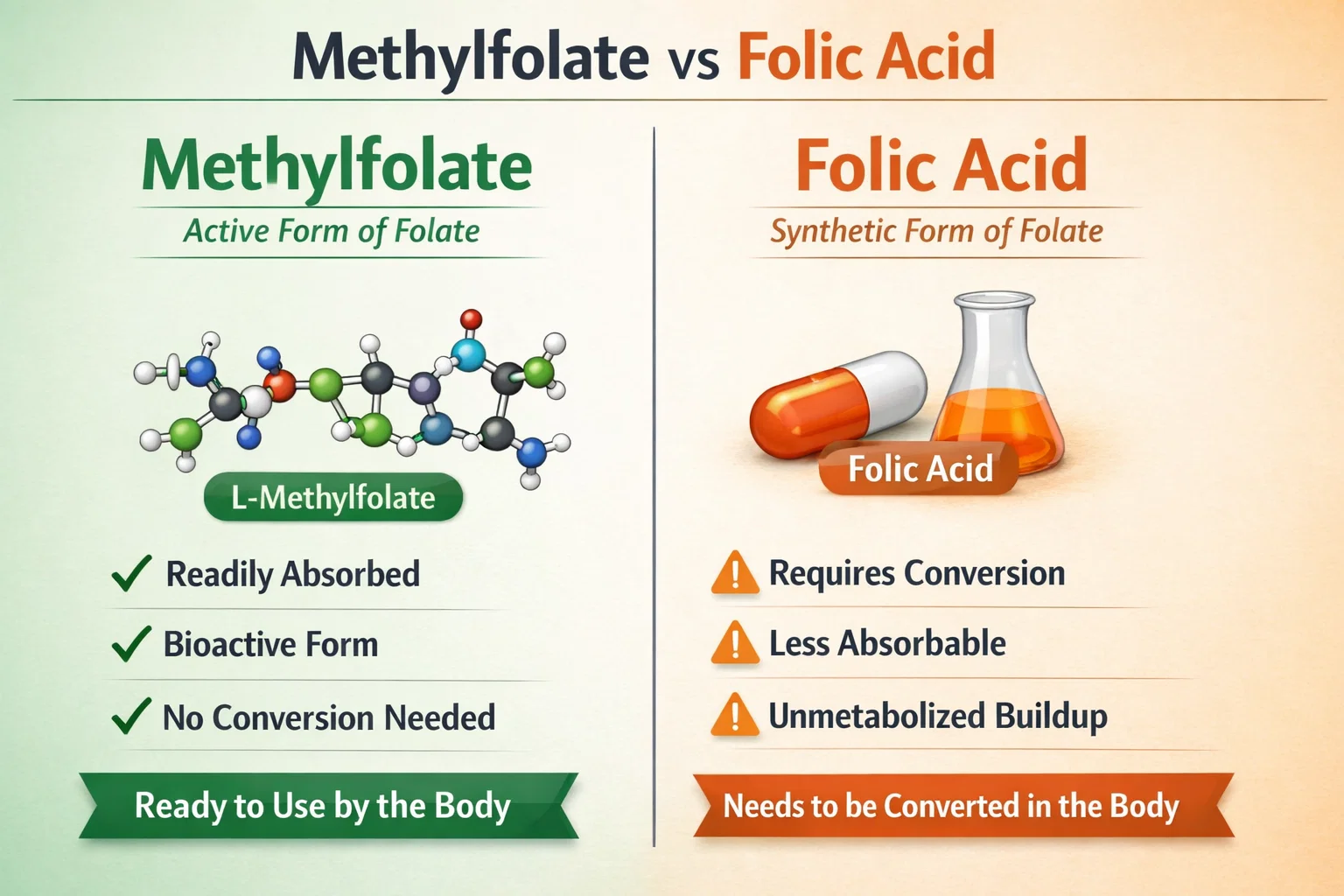
- Folic acid = a synthetic (man-made) form of vitamin B9
- Methylfolate = the active form your body can use immediately
Your body must convert folic acid into methylfolate before using it.
That’s the key difference.
What Is Folic Acid?
Folic acid is the most common form of vitamin B9 found in:
- Supplements
- Fortified foods (like bread, rice, cereals)
- Prenatal vitamins
Key Features of Folic Acid
- Man-made and stable
- Easy to add to foods
- Widely studied and recommended
- Must be converted in the body
Folic acid has been used for many years to prevent birth defects, especially neural tube defects in babies.
What Is Methylfolate?
Methylfolate (also called L-5-MTHF) is the active form of vitamin B9.
Key Features of Methylfolate
- Already active (no conversion needed)
- Absorbed quickly by the body
- Often used in special medical cases
- May help people with genetic issues
Because it is already active, methylfolate goes straight into your body’s folate cycle.
Methylfolate vs Folic Acid: Key Differences
Here’s a simple table to compare methylfolate vs folic acid:
| Feature | Folic Acid | Methylfolate |
|---|---|---|
| Type | Synthetic | Natural/Active |
| Conversion Needed | Yes | No |
| Absorption Speed | Slower | Faster |
| Availability | Very common | Less common |
| Research Support | Strong | Growing |
| Cost | Cheaper | More expensive |
How the Body Processes Methylfolate vs Folic Acid
When you take folic acid:
- It enters your body
- Your liver processes it
- It converts into methylfolate
- Then your body uses it
But with methylfolate:
- Your body skips all these steps
- It works right away
However, not everyone has trouble converting folic acid. For most people, this process works just fine.
The Role of the MTHFR Gene
One major topic in methylfolate vs folic acid is the MTHFR gene.
This gene helps your body convert folic acid into methylfolate.
What Happens If You Have MTHFR Mutation?
- Conversion may be slower
- You may have lower folate levels
- Methylfolate may work better for you
Some research shows methylfolate can raise folate levels better in these cases.
But here’s the catch:
- Many people with this mutation still process folic acid well
- Experts still recommend folic acid in many cases
Benefits of Folic Acid
Let’s explore the benefits in the methylfolate vs folic acid debate.
Why Folic Acid Is Important
- Proven to prevent birth defects
- Widely available and affordable
- Added to many foods
- Strong scientific support
Folic acid has helped reduce birth defects worldwide due to food fortification programs.
Benefits of Methylfolate
Now let’s look at methylfolate’s advantages.
Why Some People Choose Methylfolate
- Ready-to-use form
- May work better for certain genetic conditions
- May support mood and brain health
- Faster absorption
Some studies suggest it may help in certain mental health conditions when used with treatment.
Downsides of Folic Acid
No comparison of methylfolate vs folic acid is complete without risks.
Possible Issues
- Needs conversion in the body
- May build up if not processed well
- High doses may hide vitamin B12 deficiency
However, for most people, these risks are small when taken in normal amounts.
Downsides of Methylfolate
Methylfolate also has some limitations.
Possible Issues
- More expensive
- Less long-term research
- Not always necessary for everyone
Experts say methylfolate is helpful in special cases but not always better for everyone.
Methylfolate vs Folic Acid in Pregnancy
This is one of the most important topics.
Folic Acid in Pregnancy
- Strong evidence supports it
- Helps prevent neural tube defects
- Recommended worldwide
Methylfolate in Pregnancy
- May help some women with absorption issues
- Not as widely proven for birth defect prevention
Health authorities still recommend folic acid as the standard during pregnancy.
Best Food Sources of Natural Folate
Instead of choosing only supplements in the methylfolate vs folic acid debate, don’t forget natural foods!
Top Folate-Rich Foods
- Spinach
- Broccoli
- Beans
- Lentils
- Avocados
- Asparagus
Eating whole foods is always a smart and healthy choice.
Who Should Take Methylfolate?
You might consider methylfolate if:
- You have MTHFR gene mutation
- You don’t respond well to folic acid
- A doctor recommends it
Always talk to a healthcare provider first.
Who Should Take Folic Acid?
Folic acid is best for:
- Pregnant women
- Women trying to conceive
- Most healthy adults
- People on a budget
It remains the most recommended form globally.
Daily Recommended Intake
Here’s a quick guide:
| Group | Recommended Intake |
|---|---|
| Adults | 400 mcg |
| Pregnant women | 400–600 mcg |
| Breastfeeding | 500 mcg |
Always follow your doctor’s advice.
Common Myths About Methylfolate vs Folic Acid
Let’s clear up some confusion.
Myth 1: Methylfolate is always better
Not true. It depends on the person.
Myth 2: Folic acid is harmful
No. It is safe and well-studied.
Myth 3: Everyone needs methylfolate
Only certain people may benefit.
Expert Advice on Methylfolate vs Folic Acid
Experts generally agree:
- Folic acid is effective and safe
- Methylfolate may help in special cases
- Diet should come first
Most healthy people do not need expensive alternatives.
Simple Tips for Choosing Between Methylfolate vs Folic Acid
Here are some easy tips:
- Start with a balanced diet
- Use folic acid if recommended
- Consider methylfolate only if needed
- Don’t self-diagnose genetic issues
- Always consult a doctor
Final Thoughts on Methylfolate vs Folic Acid
To wrap it up, the debate of methylfolate vs folic acid doesn’t have a one-size-fits-all answer.
- Folic acid is affordable, proven, and widely recommended
- Methylfolate is active and useful in specific cases
For most people, folic acid works perfectly fine. But for some, methylfolate can offer extra benefits.
👉 The best choice depends on your body, your health, and your doctor’s advice.
Conclusion: Methylfolate vs Folic Acid
In conclusion, understanding methylfolate vs folic acid helps you make smarter health decisions. Both forms support your body in powerful ways.
If you eat healthy foods, follow medical advice, and choose the right supplement when needed, you’re already on the right track.
Stay informed, stay healthy and remember, small choices can make a big difference!
You may also read
Paul Hogan: A Complete and Inspiring Story of a Legendary Star